
Case Study
Healthcare · AI Screening
Grading Diabetic Retinopathy From a Retina Photo, in Seconds
Project Snapshot
The Impact
Seconds
From uploaded retina photo to a retinopathy level
Levels 0–4
Severity graded automatically, from none to proliferative
Smartphone
No specialised equipment needed to capture the image
Screening
An early-warning tool that routes high scores to an eye specialist
01
Overview
Diabetic retinopathy damages the blood vessels of the retina, and left untreated it can lead to vision loss and permanent blindness. It is also treatable if caught early — which most people never manage, because screening needs a clinic and a specialist. Three groups stand to gain from changing that:
Most people are simply not aware that blindness from diabetes can be prevented at an early stage. The barrier is not treatment; it is noticing in time.
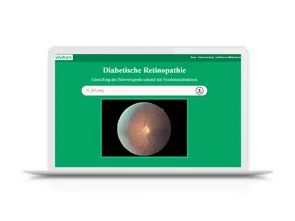
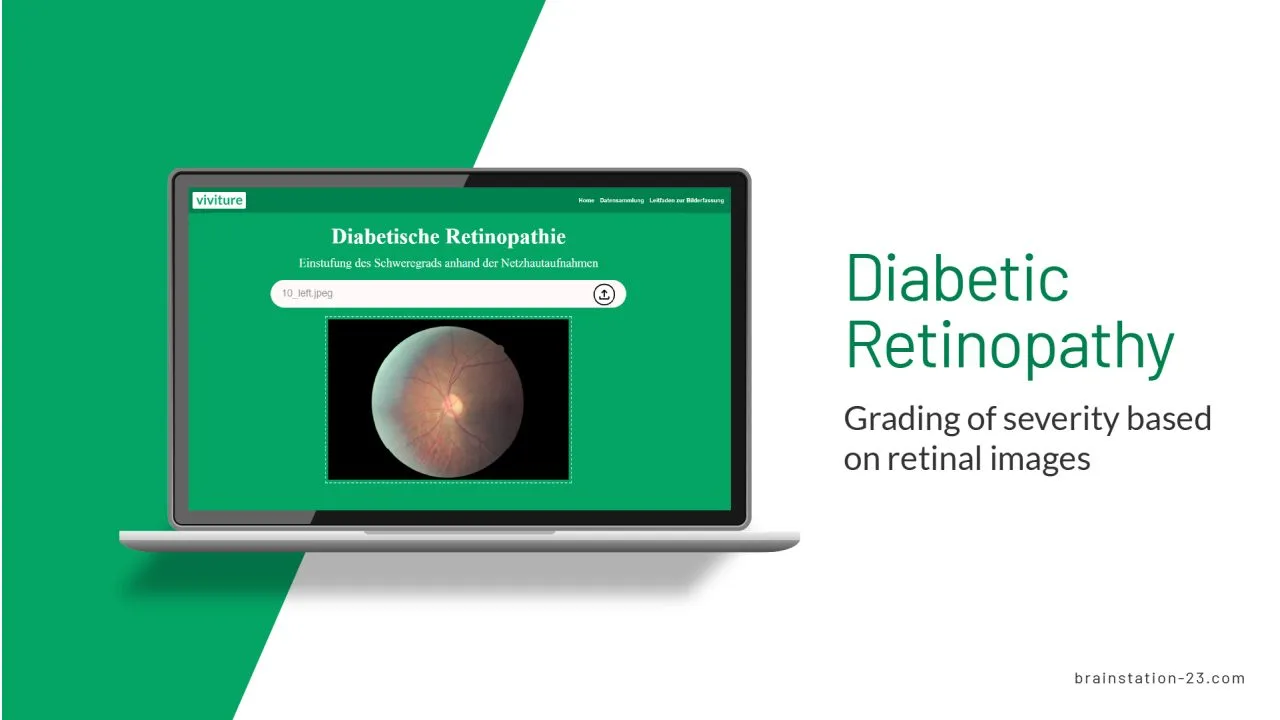
Brain Station 23 built a proof-of-concept app that measures retinopathy levels from a retina photograph, using deep learning to segment the retina and grade the disease automatically.
The result lets a patient screen from home and a doctor see where each patient stands — and it is offered as a starting point for healthcare companies and professionals who want to take smartphone screening further.
02
Business Challenges
Early detection only works if it is easy enough to happen often. Clinic-based screening is accurate but infrequent, and the disease does its damage in between.
Three pressures shaped the proof of concept.
The brief that followed was simple to state and hard to build: accurate grading from an ordinary photo, fast enough to use whenever it is needed.
Screening that only happens in the clinic?
Bring it to a 30-minute call — we will come back with an approach and a scoped estimate.
03
What We Built
The app turns a single uploaded image into a graded result, and explains what that result means and what to do next.
I
Retina image upload
Users capture a retina picture and upload it; the app processes it straight away with no additional equipment.
II
Deep-learning segmentation
Advanced deep learning algorithms segment the retina into its different layers, which is the basis for reading the disease reliably.
III
Automatic severity grading
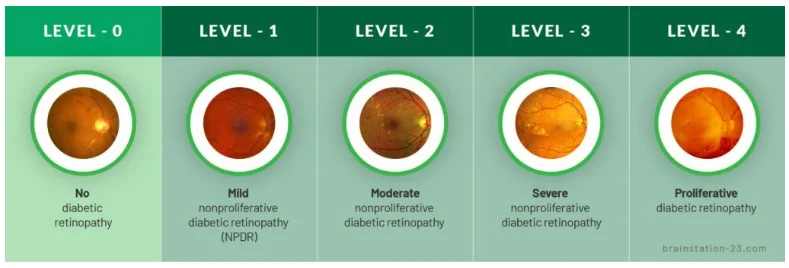
AI calculates a diabetic retinopathy score and places the image on the five-level scale, from no retinopathy through mild, moderate and severe non-proliferative to proliferative — within seconds. The team reported 99% accuracy in proof-of-concept testing.
IV
Guided, user-friendly experience
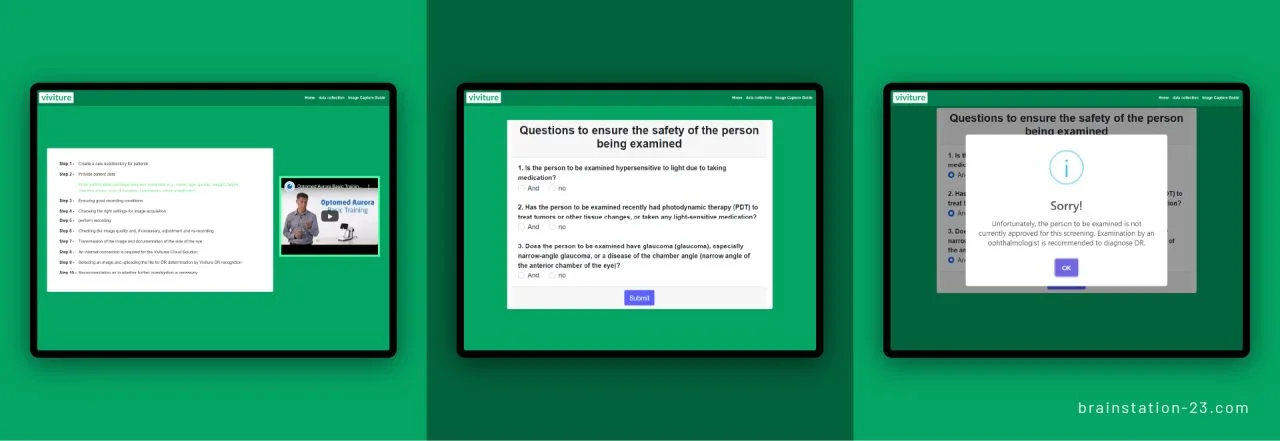
A step-by-step tutorial and an intuitive interface make the app easy to use and results easy to understand.
V
Continuous monitoring
Regular measurements let users track their progress over time and adjust treatment with their doctor.
VI
Built-in clinical routing
The app is positioned as a screening tool: a high retinopathy level is a prompt to seek evaluation from an eye care specialist, not a replacement for a full examination.
04
The Results
The proof of concept shows what becomes possible when grading moves from the clinic to the phone.
Earlier, cheaper detection
Early detection allows timely intervention to prevent vision loss, and removing the need for expensive equipment and specialised personnel lowers the cost of screening and treatment. Results arrive in seconds, so decisions and action can follow immediately.
Better care and wider access
Doctors understand each patient’s condition faster and can tailor treatment plans on accurate, timely data, while regular self-checks bridge the gap between patients and clinicians. The approach points toward wider use of AI and deep learning across other medical conditions.
The transferable lesson is that frequency beats precision for early detection. A good-enough reading taken often catches what an excellent reading taken once a year misses.
Positioning matters as much as the model. Framing the app as a screening tool that escalates to a specialist is what makes it safe to put in patients’ hands.
Exploring AI for medical imaging or screening?
You might have imaging data and no model, a model with no usable app around it, or a screening workflow that only happens in the clinic. In every case, the first step is the same.
Book a 30-minute call with Brain Station 23. Bring your clinical use case and your data, and we will come back with a proposed approach, a delivery plan and a scoped estimate.
Screening that only happens in the clinic?
Bring it to a 30-minute call — we will come back with an approach and a scoped estimate.
05