AI & ML · Computer Vision Security
Spotting a Weapon on Camera and Locking the Door Before Anyone Reaches It
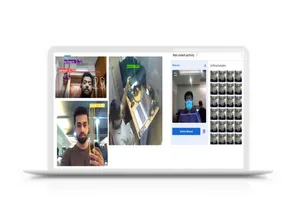
Project Snapshot
- Project : AI-powered Violent Object Detector with smart-home response
- Industry : Security and surveillance — homes, businesses and public spaces
- Scope : Real-time weapon detection, IoT device control, pose estimation, facial and licence-plate recognition
- Platforms : Surveillance cameras, local hardware and a home-automation hub
- Technologies : Frigate (local real-time AI object detection), Home Assistant
- Detects : Guns, knives and other sharp objects
The Impact
Real time
Guns, knives and sharp objects identified as they appear on camera
Local
All AI processing on the owner’s own hardware, not in the cloud
Automatic
Response actions — like locking the door — triggered without a person
Multi-signal
Pose, face and licence plate combined for a fuller threat picture
Overview
Surveillance cameras are everywhere, but a camera only records; someone still has to notice. As violent incidents grow harder to predict, businesses, governments and law enforcement want systems that recognise danger and act on it. The detector had to serve three settings:
- homes, where an owner may be away when a threat appears at the door,
- busy public spaces, where one armed person is easy to miss in a crowd, and
- businesses and agencies, which need evidence and faster response, not just footage.
The weak point in most setups is the gap between the camera and the response. Smart-home devices could lock doors and raise alarms, but nothing was telling them when to.
Brain Station 23 developed an AI-powered Violent Object Detector that identifies guns, knives and other sharp objects in real time, and connects to home IoT devices so the system can respond automatically.
Built on Frigate for local, real-time detection and Home Assistant for device control, it adds pose estimation, facial recognition and licence-plate recognition to judge threats more accurately.

Business Challenges
Detection is only useful if it is fast, accurate in messy conditions, and connected to something that can act.
Three pressures shaped the system.
- Threats are hard to see in crowds. Without automated detection, spotting a weapon or a potential attacker among many moving people is very difficult.
- Cameras could not act. Home security devices were connected to the internet but had no way to detect violent objects or people, so they could not respond on their own.
- Accuracy had to hold outdoors and in crowds. Simple object detection struggles in complex scenes, so the system needed more context to avoid missing threats or raising false alarms.
The goal was a system that sees, judges and responds — in that order, and in seconds.
Cameras that record but never react?
Bring it to a 30-minute call — we will come back with an approach and a scoped estimate.
What We Built
The detector links computer vision to home automation, so recognising a threat and responding to it happen in the same moment.
Real-time violent object detection
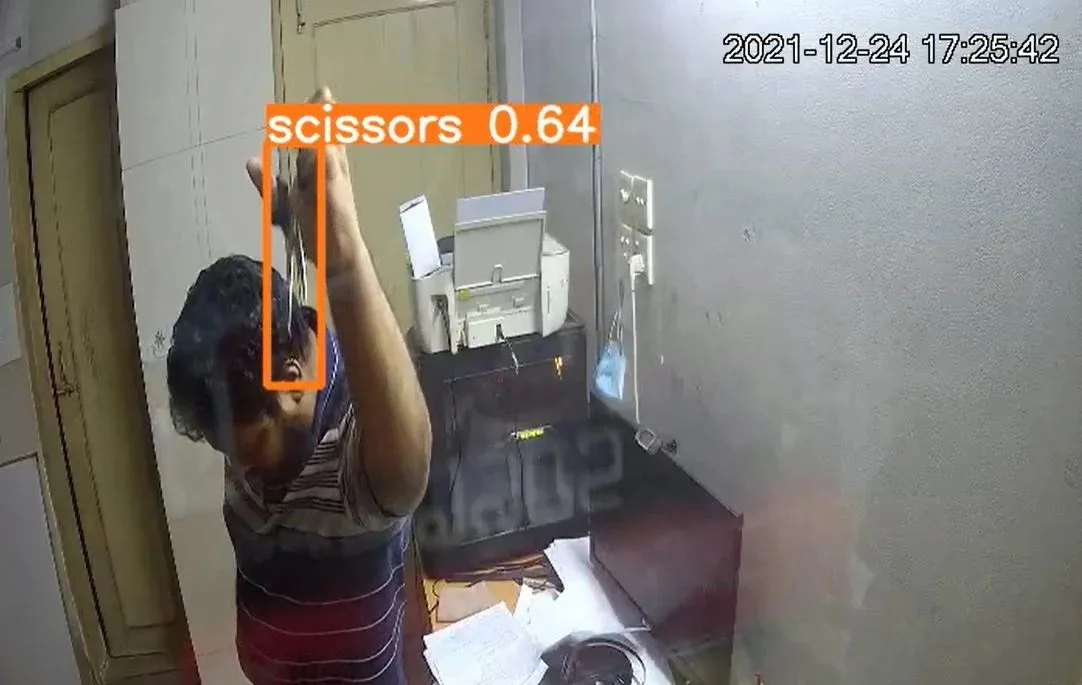
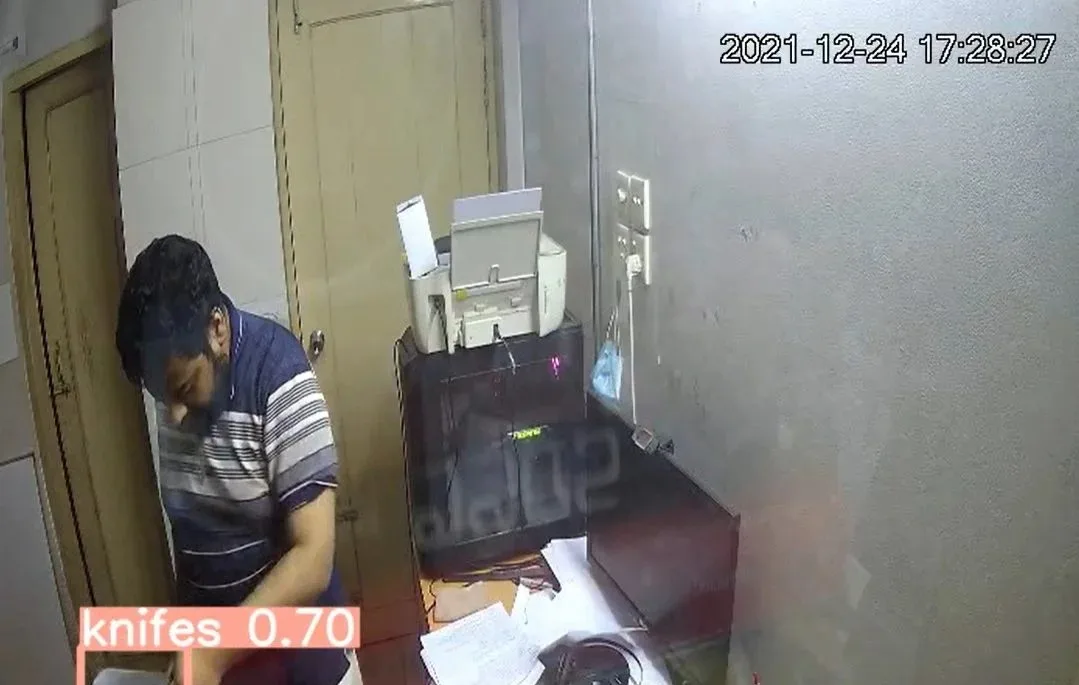
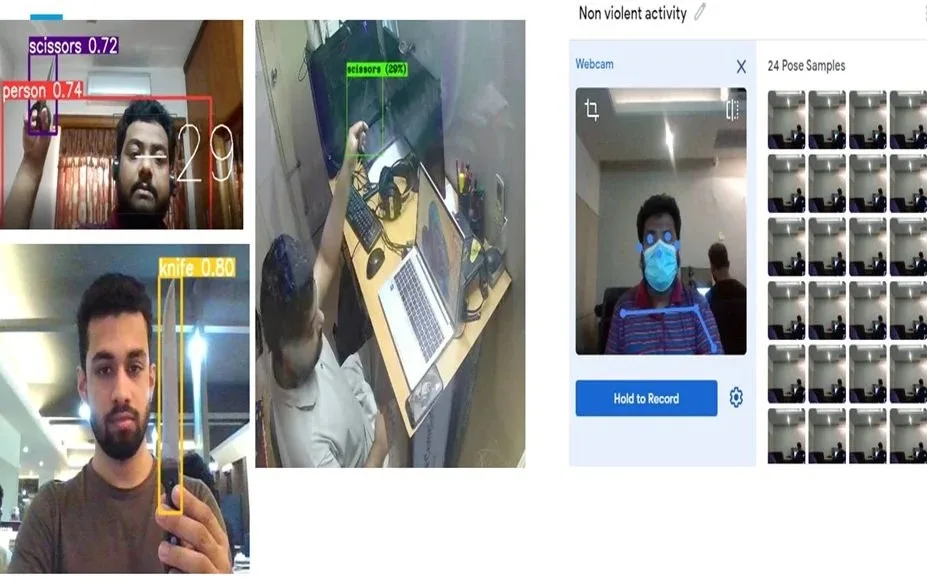
AI identifies guns, knives and other sharp objects in live camera feeds as they appear.
Local AI with Frigate
Frigate performs all object detection locally on the owner’s own hardware, tracking objects in real time and pinpointing the moment a threat appears.
Smart-home response with Home Assistant
Home Assistant connects and manages IoT appliances, so when an outside camera detects violence the system can lock the door and alert the owner automatically — and users can enable or disable devices remotely.
Pose estimation for crowded scenes
Pose estimation considers the position of people and objects in space, improving accuracy in challenging environments like crowds and outdoor areas.
Facial and licence-plate recognition
Face and plate recognition help identify suspicious people and vehicles, giving a more complete assessment of a possible threat.
Built to scale
The same system adapts from a single home to large public spaces.

The Results
Early deployments point to safer spaces and faster response, on the owner’s side and on the authorities’.
Safer spaces, faster response
Real-time detection increases safety in public and private spaces, and automatic actions such as locking a door let the system respond before a person can. Early adopters report fewer violent incidents thanks to quick detection and response, and homeowners value the added security and simple remote control of their devices.
Evidence, efficiency and trust
Law enforcement users have found the system helpful for gathering evidence, businesses report lower costs from security breaches and vandalism, and the approach has helped build public confidence in surveillance that actually acts on what it sees.
The transferable lesson is that detection is only half a security system. Tying the model to devices that can act — locks, alerts, lights — is what turns a warning into protection.
Running the AI locally is the other deliberate choice. Keeping footage on the owner’s hardware removes cloud latency from the response and keeps sensitive video private.
Have cameras, but nothing that acts on what they see?
You might be recording hours of footage no one reviews, relying on people to spot threats in crowds, or running smart devices that do not know when to respond. In every case, the first step is the same.
Book a 30-minute call with Brain Station 23. Bring your cameras, your environment and the response you need, and we will come back with a proposed approach and a scoped estimate.
Cameras that record but never react?
Bring it to a 30-minute call — we will come back with an approach and a scoped estimate.
Related Case Studies