Less time spent writing DWI reports
Average time to obtain a remotely signed blood search warrant
Auto-generated from one guided entry — warrant, DIC, affidavit, booking and lab
No documents to lose or damage between the roadside and the prosecutor
A DWI arrest produces a stack of paperwork, and every sheet of it matters in court. In one US state, officers were writing those reports by hand with no system to deliver them to prosecutors — which cost time on three sides of the case:
Blood alcohol evidence has a clock on it. Every minute spent chasing a signature or rewriting a form is a minute that weakens the case, so the reporting system is really part of the evidence chain.
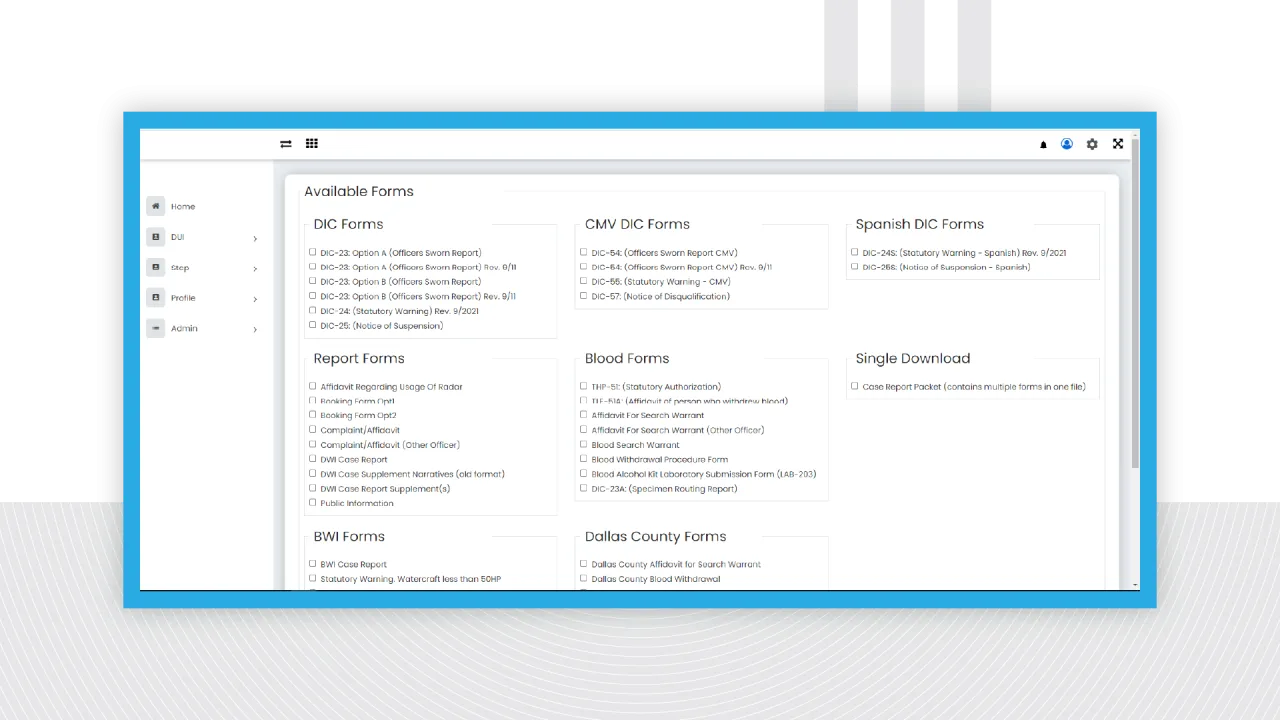
Brain Station 23 developed an online data reporting system that walks an officer step by step through the DWI report, then auto-populates and generates every form associated with the arrest from that single entry.
Built with the state’s District and County Attorney’s Association, it added electronic signatures for blood search warrants in 2017 — cutting the warrant process to around 20 minutes on average.
DWI enforcement is won or lost on documentation. The officer is the only source of the facts, and the process asked them to write those facts out again and again.
Four pressures shaped the system.
Together these made the paperwork, not the arrest, the slowest and riskiest part of a DWI case.
Bring it to a 30-minute call — we will come back with an architecture and a scoped estimate.
The system captures the facts once, prompts for what prosecutors need, and turns that single entry into every document the case requires — signed where it has to be.
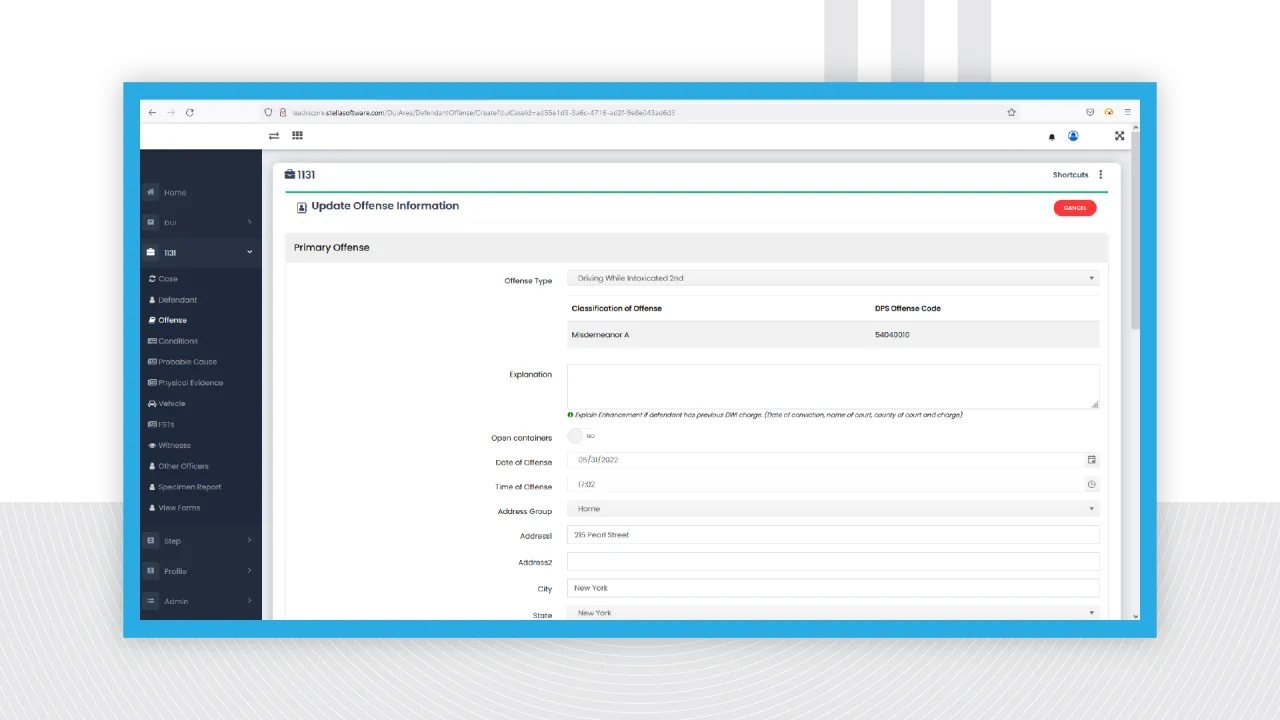
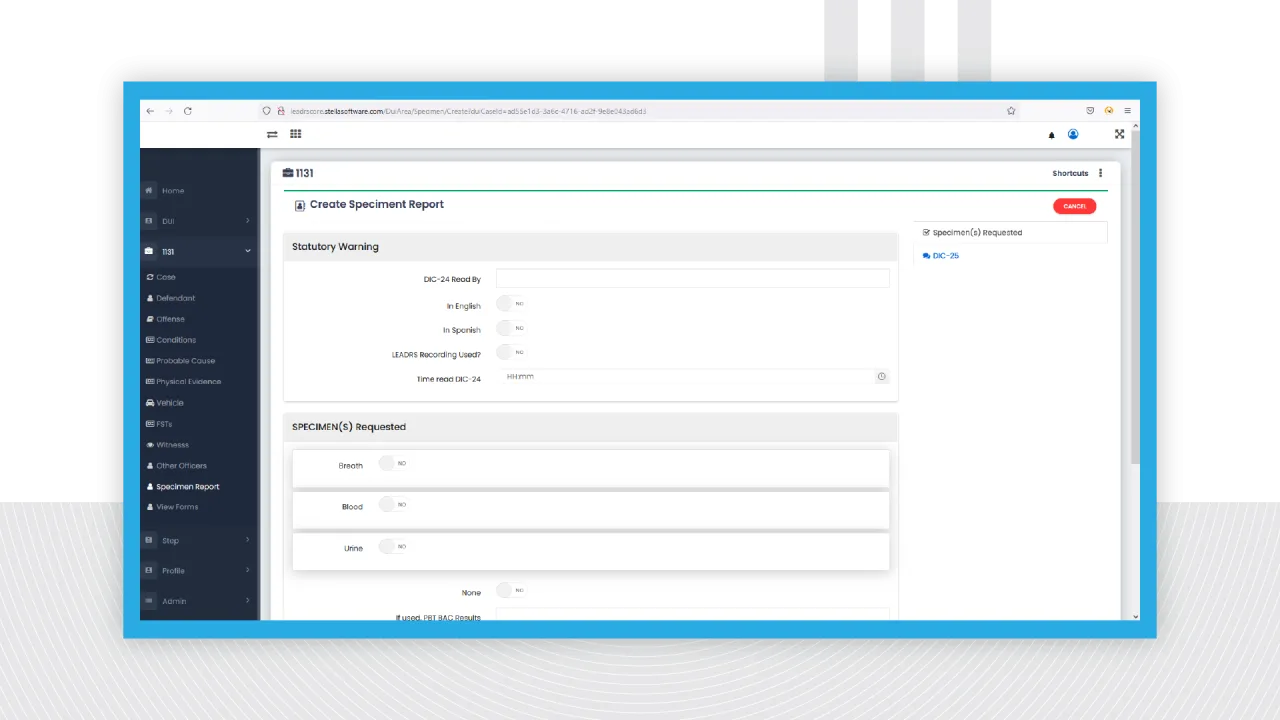
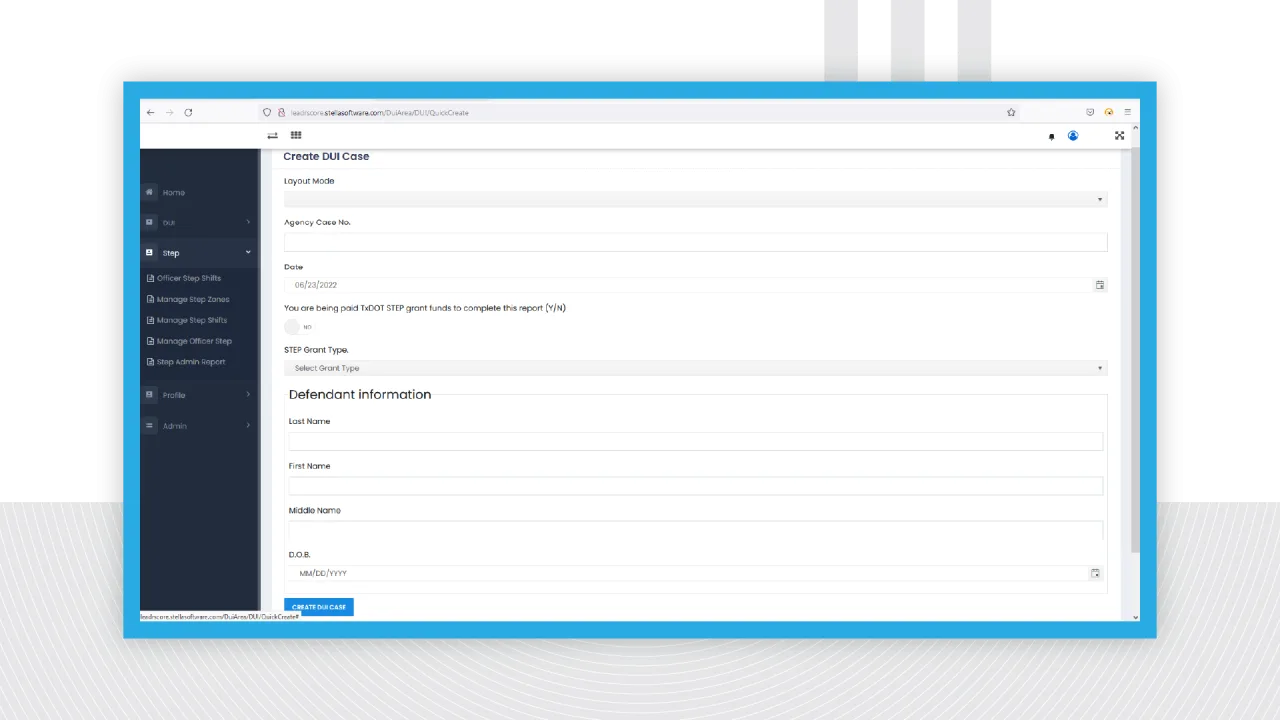
A sequence of free-text boxes, drop-down menus and check boxes walks the officer through the DWI report in order, so nothing is skipped.
The questions push officers to record more detail than they would traditionally include on their own — the detail that makes a prosecution hold up.
From the information already entered, the system auto-populates and generates every DWI-related document: blood search warrant, DIC forms, complaint/affidavit, booking forms, lab forms and more.
Officers and judges sign warrants securely and remotely, keeping documents private and bringing the average warrant process down to about 20 minutes.
District and County Attorneys receive a well-detailed report associated with each DUI/DWI arrest, ready to support prosecution.
Built on ASP.NET Core MVC and SQL Server with Kendo UI and Telerik Reporting, Memcache for speed and SignalR for real-time updates — with no paper to lose or damage along the way.
The outcomes show up in the officer’s shift, the judge’s night and the prosecutor’s file.
Automation reduced reporting time by up to 60% and cut redundant data entry, freeing officers to focus on more important work. Remote e-signed warrants take around 20 minutes on average, so evidence is secured quickly and cases move toward resolution faster.
Reports are more accurate and complete, and compliance with state reporting requirements has increased. District and County Attorneys receive a detailed report for every DUI/DWI arrest, improving the efficiency and effectiveness of enforcement and the chances of a successful prosecution.
The transferable lesson is to capture facts once and generate documents many times. Most of the 60% came from never asking an officer to write the same thing twice.
The e-signature feature is where software meets evidence. Getting a judge’s signature in 20 minutes instead of a drive across the county is not a convenience; it is what keeps time-sensitive evidence admissible.
You might be re-entering the same facts across many forms, waiting on physical signatures, or sending incomplete files to the people who depend on them. In every case, the first step is the same.
Book a 30-minute call with Brain Station 23. Bring your forms and your approval chain, and we will come back with a proposed architecture, a delivery plan and a scoped estimate.
Bring it to a 30-minute call — we will come back with an architecture and a scoped estimate.