

How much information about Bangladesh’s organizations and citizens is already circulating on the dark web? And what can an organization do when its data is exposed beyond its control?
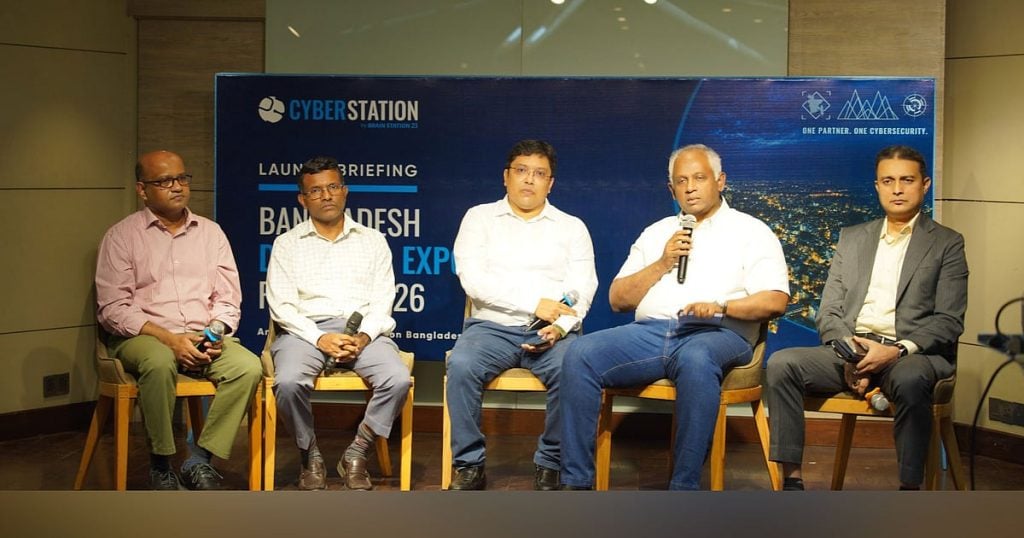
CyberStation, the cybersecurity division of Brain Station 23 PLC, set out to answer these questions in its Dark Web Exposure Report 2026. The report was launched on 15 October at the Bangladesh Cyber Resilience Briefing 2026 in Dhaka.
Using verified sources and DarkWatch, its in-house dark-web monitoring platform, CyberStation assessed exposure across 767 organizations in 15 sectors.
- The key figures from CyberStation’s assessment.
- Which sectors face the greatest exposure.
- Why identifying exposure matters and what organizations can do about it.
What did CyberStation’s assessment find?
The assessment covered 767 domains across 15 sectors. The findings included evidence of exposed login credentials and user records circulating online.
Here are the key figures:
CyberStation described these figures as conservative minimum estimates, meaning the actual scale of exposure may be higher.
The report draws a clear line between data exposure and a confirmed system breach. Credentials or records found online do not, on their own, prove that an organization’s internal systems have been compromised.
According to CyberStation, much of the information examined was copied from malware-infected personal devices and then traded online. The assessment did not involve accessing any organization’s internal systems or testing credentials.
Which sectors face the greatest exposure?
The assessment identified differences in the nature and extent of exposure across sectors.
Government services accounted for the largest share of exposed citizen records. This makes the protection of public information an important consideration in the country’s broader cybersecurity efforts.
Meanwhile, technology and telecommunications had the highest rates of exposure, according to the findings.
These results provide a sector-level view of the issue and help highlight where exposure is particularly significant. They also reinforce the importance of understanding cybersecurity risks beyond an organization’s internal systems.
Why identifying exposure matters
Cybersecurity is not only about responding when an attack happens. It also involves identifying information that is already exposed and understanding the risks it may create.
When login credentials or personal records circulate online, organizations need to understand the nature of the exposure and take appropriate steps to address it. Timely identification can help them assess potential risks and determine what action is needed before exposed information is misused.
“We cannot address risks that we cannot see. Our goal is to help organizations understand what information has been exposed and act before cybercriminals can misuse it,” said Muhibbul Muktadir Tanim, head of cybersecurity services at CyberStation.
The findings underscore the value of visibility in cybersecurity. Organizations need a clearer understanding of their exposure to make informed decisions about their security priorities and responses.
Building Bangladesh’s own cybersecurity capabilities
Addressing cybersecurity risks also requires investment in local expertise and technology.
M J Ferdous, executive director of Brain Station 23, said CyberStation was built on the company’s 20 years of software development experience.
“Today’s event was an opportunity to review where the country stands in cybersecurity and what initiatives are needed going forward. We must reduce our dependence on foreign software and strengthen the country’s own cyber capabilities. If our contribution can be of any use, we sincerely want to stand beside everyone in this effort.”
Cybersecurity expert Tanvir Hassan Zoha also highlighted CyberStation’s contribution to the field, noting that its technology could help raise awareness of cyber risks and support the development of effective prevention and response strategies.
Technology entrepreneur Munir Hasan emphasized the importance of supporting locally developed solutions, including DarkWatch, a dark web monitoring platform developed by Brain Station 23. He said collective efforts to advance homegrown technology could contribute to strengthening Bangladesh’s overall cybersecurity in the future.
Bringing different perspectives to the conversation
The briefing also featured a panel discussion on Bangladesh’s dark web exposure and ways to address the associated risks.
The panelists included Professor Mohammad Shahriar Rahman, consultant to the University Grants Commission; Mohammad Shamsul Haque, head of the Special Response Unit of Dhaka Metropolitan Police; Md Imran Khan, joint secretary (ICT) at Bangladesh Bank; and Mahtab Uddin Ahmed, a technology specialist.
The discussion emphasized coordinated efforts to prevent the misuse of exposed information and strengthen responses to cybersecurity risks.
Around 150 participants from different sectors attended the event, reflecting the importance of bringing organizational leaders, regulators and cybersecurity professionals into the same conversation.
Turning visibility into action
The findings from CyberStation’s assessment highlight the scale of information exposure identified across Bangladesh’s 15 sectors. They also point to the importance of identifying risks early, understanding their potential consequences and taking appropriate action.
For organizations, cybersecurity awareness is an important starting point. Knowing what information may be exposed can help inform decisions about risk management and response.
CyberStation said it would continue working to raise cybersecurity awareness among organizations and citizens and provide services to help address these risks. Its stated goal is to strengthen the ability to identify exposures in a timely manner and take appropriate action.
As Bangladesh continues to strengthen its cybersecurity capabilities, better visibility into information exposure will remain an important part of the conversation.
About CyberStation
CyberStation is the cybersecurity division of Brain Station 23 PLC, built on the company’s 20 years of software development experience. Its work focuses on raising cybersecurity awareness and helping organizations address cyber risks.